Things You Should Know About Visa Sponsorship in the United States Under the Trump Administration
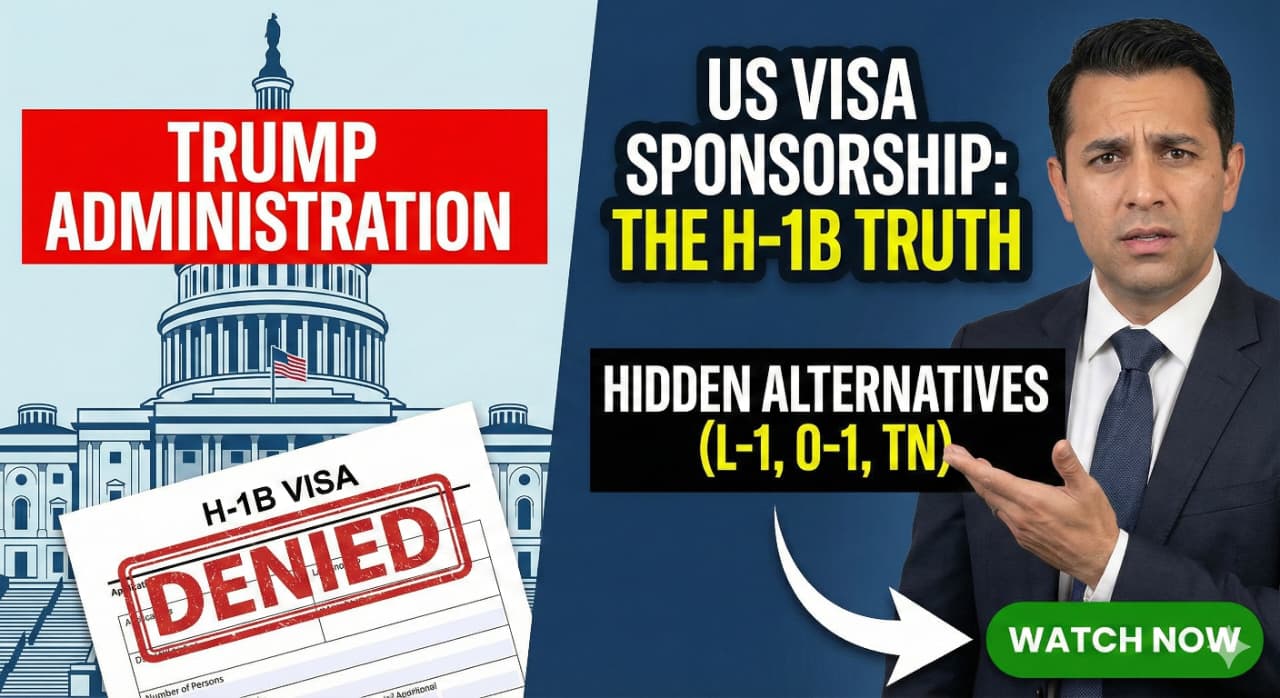
Things You Should Know About Visa Sponsorship in the United States Under the Trump Administration. Visa Sponsorship Under Trump: A Gauntlet, Not a Gateway
Forget what you thought you knew about visa sponsorship in the United States. Trump’s second act, starting in January 2025, isn’t just about “significant transformations.” It’s a seismic shift, carving a jagged landscape where old rules crumble and new, unyielding barriers appear. For any foreign national eyeing a job in America – or any U.S. employer desperate for specialized talent – getting a grip on these changes isn’t just crucial; it’s a matter of survival. This isn’t your grandma’s immigration guide. This is the bare-knuckle truth about what stands between you and a U.S. visa.
Visa Sponsorship: The Cold, Hard Basics

So, what is this “sponsorship” anyway? It’s a U.S. employer practically groveling to the feds, asking for permission for some “foreigner” to come work. They’re vouching for your very soul, taking responsibility for your job, and often, your continued presence on American soil. It’s a heavy lift, an emotional anchor, and a bureaucratic nightmare all rolled into one. No wonder some companies run a mile.
Still, we’ve got the usual suspects: H-1B, often a gilded cage for “specialty occupations;” L-1, for multinational companies moving their own pawns; O-1, designed for the true unicorns, the “extraordinary;” E-2, for those with treaty cash to splash; TN, a polite nod to North American neighbors. And then, well, a whole smorgasbord of niche categories, each with its own set of hoops to jump through.
Trump’s Policy Playground: A Wrecking Ball and a Tightrope

Let’s not mince words. The Trump administration has always had a bone to pick with immigration. “America First” wasn’t just a slogan; it was a battering ram. His first term, 2017-2021, left employment-based immigration looking like a war zone, with executive orders flying and regulations tightening the whole nine yards. Now he’s back. If you think things are going to get easier, you’re barking up the wrong tree.
Expect scrutiny fiercer than a diamond heist. Denial rates? Higher than a kite. Enforcement? Like a bulldog with a bone. Program rules? They’ll likely be rewritten on a whim, faster than you can say “due process.” Specific policies are a moving target. Keep your ear to the ground, or you’ll be caught flat-footed.
H-1B: The Golden Ticket, If You’re Lucky (And Rich)

Ah, the H-1B. The Holy Grail for skilled workers. The most coveted, the most fought over. Here’s what you absolutely must know about this beast under the current regime.
Eligibility? You Better Be Perfect.
Want in? First, a job offer. A “specialty occupation.” That means a fancy degree, minimum a bachelor’s, in a specific field. No generalists allowed. Then, the prevailing wage. Your employer must pay you what locals get, or better. And the kicker? They have to prove they couldn’t discover a single qualified American worker. That’s a tall order, even if it’s true.
The Annual Cap: A Cruel Lottery
This is where the dream often dies. Only 65,000 regular H-1B visas each year. Another 20,000 for those with advanced U.S. degrees – a tiny consolation prize. Applications always shoot through the roof. What happens then? A lottery. A literal flip of the coin. Your future, tossed into the air.
And Trump? He’s been itching to change this lottery into a wage-based system: higher salary, better odds. Pure Darwinism. Imagine the scramble, the desperation. It’ll gut opportunities for entry-level tech talent, fresh grads. It’s truly a game stacked against the young.
Application Process: A Marathon, Not a Sprint
The clock starts ticking in March. Employers frantically file petitions for jobs that won’t even begin until October. First, a Labor Condition Application. Then, if you’re one of the lucky few chosen by the lottery gods, the H-1B petition to USCIS. Processing? Oh, it’s a tortoise race. Months. Often a year or more. Forget plans, forget certainty. Unless you pay the piper for “premium processing”—an extra fee, a king’s ransom, to cut the wait to a mere 15 days. Money talks, right?
L-1 Visas: Keep It In The Family, But Prove Your Worth
The L-1 visa: for multinational corporations moving execs, managers, or “specialized knowledge” employees from one branch to another. Sounds easy, doesn’t it? Think again.
L-1A vs. L-1B: Degrees of Difficulty
L-1A, for the big shots – managers, executives. Three years initially, extendable to seven. Swanky. L-1B, for those with “specialized knowledge.” Three years, but only extendable to five. Not quite as swanky, and a whole lot harder to get.
The Trump administration has tightened the screws on “specialized knowledge” like a vice. They want proof. Not just “I’m good at my job.” They demand unique, advanced knowledge; something so rare, so invaluable, it simply doesn’t exist among ordinary Americans. You’d better have documented every single damn thing you’ve ever learned, or your application is dead in the water.
Blanket L Petitions: A Rare Warmth in the Cold
Big companies, the real global giants, can get “blanket” approval. This offers a fast track, a streamlined path. But even this golden ticket comes with strings. Maintaining that status means constant scrutiny, periodic reviews. And those reviews? They’re now stricter than a school marm. Don’t slip up.
Other Visas: Scraps from the Table, For the Few
Beyond the big two, a few other options exist. Don’t hold your breath for easy street.
O-1 Visas: For the Chosen Few, the Prodigies
The O-1 is for the truly extraordinary. Scientists, artists, business moguls, athletes. No cap! It’s less restrictive, a real godsend. But you need a trophy cabinet full of awards, publications in every major journal, media mentions, letters from industry titans. If you’re a genius, this one’s for you. For the rest of us? Keep dreaming.
TN Visas: A Fleeting Glimpse for Neighbors
Canadians and Mexicans in certain professions get a polite nod under NAFTA/USMCA. This is a relatively streamlined process, with no annual caps. But it’s temporary. A short visit, not a permanent move. Don’t mistake it for a green card path. It’s a pit stop.
E-2 Treaty Investor Visas: Got Cash? Maybe a Path.
Got money to burn? Nationals of treaty countries can invest a “substantial” sum, start a business, and direct it. Not traditional sponsorship, no. But for the entrepreneurial types, it’s a back door. A popular workaround for those who can afford it.
The Sponsorship Process: A Bureaucratic Gauntlet
So you’ve picked your poison, figured out your visa type. Now comes the ordeal. Think of it as an obstacle course designed by Kafka.
Finding an Employer: Good Luck with That
First rule of Fight Club: Find an employer willing to sponsor. Many companies see it as a colossal headache – expensive, complex, legally fraught. Only the biggest, the most desperate for talent – the tech giants, the hospitals, the universities – bother to set up proper programs. Don’t just knock on any door; you need to discover a champion.
Labor Certification: More Red Tape
For many visas, employers must get a “prevailing wage determination.” This is the government making sure you’re not undercutting American workers or getting exploited yourself. It’s a necessary evil, another layer of bureaucracy.
Filing the Petition: Prepare for the Paper Blizzard
Form I-129. That’s your baby, along with a mountain of supporting documents. Educational accolades, previous job letters, ridiculously detailed job descriptions, company financials, proof they can actually pay you. It’s an information dump. Every detail will be scrutinized. Don’t leave a stone unturned.
Consular Processing or Change of Status: The Final Hurdle
Petition approved? Hooray! Now, if you’re abroad, you face the consulate interview. A U.S. officer staring into your soul, deciding your fate. If you’re already in the U.S. on another visa, you might apply for a “change of status.” Many still recommend leaving and getting that visa stamp, though. Why? Because you never know when you’ll need to travel, and without that stamp, you’re stuck.
Challenges and Obstacles: Welcome to Purgatory
Under Trump, the road to a visa is paved with thorns. Be prepared for a brutal assault.
Increased RFEs: The Bureaucratic Black Hole
Requests for Evidence. RFEs. They’re coming for you. USCIS now dishes them out like candy on Halloween. They want more documents, more clarification, more proof. This drags out processing times, turns a molehill into a mountain, and significantly ups your chances of a flat-out denial. Common targets? “Is this really a specialty occupation?” “Is your relationship with your employer legitimate?” They’re looking for cracks.
Higher Denial Rates: The Axe Falls Swiftly
Forget the good old days. Trump’s first term saw denial rates skyrocket. H-1B initial petitions shot up from 10% in 2015 to over 24% by 2018. L-1B denials? Even worse. It’s a bloodbath out there. Uncertainty reigns supreme.
Site Visits and Fraud Detection: Big Brother Is Watching
USCIS doesn’t just read papers anymore. They will show up unannounced at your employer’s doorstep. Knock, knock! Site visits are expanded, vigilant, checking records and verifying petition info. Any discrepancy, any tiny slip-up, and your petition could be pulled. Keep your house in order, or else.
Travel Restrictions and Processing Delays: Stranded
Hold your breath. Travel bans. Enhanced vetting. Backlogs for days, for months, stretching into a year or longer. Forget careful planning. You’re at the mercy of the system. Companies suffer, workers are left in limbo. It’s a nightmare wrapped in red tape.
Legal Protections: A Faint Echo in the Storm
Despite the onslaught, a few legal protections persist. Don’t forget them. They are your shield, however thin.
Wage and Working Condition Protections: Small Mercies
You must be paid what’s on your Labor Condition Application – the prevailing wage, minimum. No employer can make you pay their sponsorship costs. You get the same benefits and working conditions as U.S. workers. It’s not much, but hold onto it.
Anti-Discrimination Protections: On Paper, Maybe
Federal law says no national origin or citizenship status discrimination. They can’t favor one over the other if both are legal to work. The Department of Justice supposedly investigates. Your recourse is limited, but it exists.
Due Process Rights: A Sliver of Hope
Denied? You have a right to understand why. And you can appeal or file motions to reconsider. It’s not a fair trial, but you’re not entirely without a voice.
Portability Provisions: A Life Raft
H-1B workers, listen up: you can change employers. It’s called “portability.” A new employer files a petition, and you can start working for them before it’s approved. This is a vital safety net against a bad boss or sudden layoff. Use it.
Recent Bans and Restrictions: The Whims of Power
These policies change like the wind. What’s true today might be a relic tomorrow. Stay vigilant.
Country-Specific Travel Bans: The Hammer Can Drop
Remember the “Muslim bans” of his first term? Expect more. They might get challenged, modified, but they can still leave you stranded. If your country is on the target list, consult an attorney yesterday.
Industry-Specific Restrictions: Big Brother, Again
Tech. National security. Advanced computing, AI, biotech, aerospace. These fields face hyper-scrutiny. Export control laws, security concerns. Your eligibility could evaporate.
Suspension of Certain Visa Processing: High and Dry
Consulates shut down. Visa processing suspended. Public health, “security,” administrative whims. Approved visas gather dust. You’re stuck abroad. What good is an approved visa if you can’t get it?
Pathways to Permanent Residence: The Long, Hard Climb
For many, a temporary visa is just a stepping stone. The ultimate prize? A green card. For some, it’s a grueling, multi-decade struggle.
Employment-Based Green Cards: The Promised Land (Maybe)
Five categories exist. EB-1 for the truly extraordinary (execs, professors, rockstars). EB-2 for advanced degrees or “exceptional ability.” EB-3 for skilled workers. It’s a hierarchy. First, labor certification (PERM). Then, the I-140 immigrant petition. Then, adjustment of status or consular processing. But here’s the rub: per-country caps. If you’re from India or China, you’re looking at decades in line. A lifetime, sometimes.
Dual Intent: A Glimmer of Reason
H-1B and L-1 visas are “dual intent.” You can aim for a green card while keeping your temporary status. This is a precious permission. Not all visas offer this lifeline.
Employer Responsibilities: Don’t Get Caught Slipping
Sponsoring foreign workers is a commitment. Companies must stay squeaky clean to protect everyone.
Public Access File: Open Your Books
Employers must keep a Public Access File: LCA, wage records, benefits summaries. It’s public, it’s government-auditable. Don’t hide anything.
Notification Requirements: Tell Everyone!
H-1B hires? Existing employees need to know. Post it up, email it out. Transparency, they say, prevents adverse effects on U.S. workers.
Restrictions on Benching and Termination: Even They Have Limits
You cannot bench an H-1B worker without pay. Nope. If you terminate them early, the employer must offer to pay for their ticket home. It’s a minor kindness, but it’s there.
Strategies for Successful Sponsorship: How to Win This Game
Given this minefield, you need to be sharp. Strategic. A chess master.
Early Preparation: Don’t Just Show Up
Start now. Not tomorrow. Get ahead of schedule. Document everything. Anticipate every RFE. Organizational charts, detailed job duties, credential evaluations. Make it bulletproof.
Alternative Visa Strategies: Think Outside the Box
The H-1B lottery is a gamble. Got an O-1 profile? L-1 experience? An E-2 investment? Or are you Canadian/Mexican for a TN? Don’t put all your eggs in one basket.
Legal Representation: You’d Be a Fool Not To
This isn’t DIY territory anymore. Get experienced immigration attorneys. They navigate the labyrinth, craft the perfect petition, slap down RFEs, and keep you compliant. This is non-negotiable.
Employer Advocacy: Find Your Champion
Cultivate those relationships. Find employers who get it, who value international talent. Prove your worth. Make the investment in you a no-brainer. Be indispensable.
Future Outlook: Stay Frosty
The immigration game never stops changing. Keep your eyes peeled.
Monitoring Policy Changes: Keep Your Ear to the Ground
Executive orders, regulations, court battles, agency guidance. It all matters. Official USCIS updates, legal newsletters. Your attorney is your best friend here. Don’t get caught off guard.
Advocacy: A Sisyphean Task
Organizations fight for reform. It’s an uphill battle, often fruitless in the grand scheme. But every little change, every court victory, shapes the landscape.
Conclusion: A Marathon, Not a Sprint
Navigating visa sponsorship under Trump is a fight. It demands clarity, planning, and a thick skin. From basic eligibility to intricate legal protections, from arbitrary restrictions to strategic maneuvers – you must know it all. The environment is hostile. Denial rates are up. Scrutiny is pervasive. Processing times are a joke.
But opportunities still exist, for the truly qualified, for those employers daring enough to invest. Success demands meticulous preparation, legal heavyweights in your corner, impeccable timing, and sheer, bloody persistence. Whether you’re a foreign professional desperate to contribute or an employer hunting for global talent, understanding this system inside out is your only viable path. Adaptability isn’t a luxury; it’s a requirement.
The journey for a U.S. visa today? It’s a grueling marathon. A brutal test of wills. But with the right knowledge, the right team, and an unwavering spirit, it remains, just barely, an achievable dream for those who refuse to give up.
-
Things You Should Know About Skilled Worker Visa Sponsorship in the UK Post-Brexit in 2026.
Things You Should Know About Skilled Worker Visa Sponsorship in the UK Post-Brexit The Wild, Untamed World of UK Skilled Worker Visa Sponsorship. Remember that whole ‘Brexit’ thing? Well, buckle up, because the UK’s immigration landscape just got ripped up and stitched back together, Frankenstein-style. Free movement? Poof! Gone. Vanished. It’s all about a cold,…
-
Things You Should Know About Visa Sponsorship in the United States Under the Trump Administration
Things You Should Know About Visa Sponsorship in the United States Under the Trump Administration. Visa Sponsorship Under Trump: A Gauntlet, Not a Gateway Forget what you thought you knew about visa sponsorship in the United States. Trump’s second act, starting in January 2025, isn’t just about “significant transformations.” It’s a seismic shift, carving a…
-
Things U Should Know About H1-B Visa in 2026

Things U Should Know About H1-B Visa in 2026 A U.S. student, itching to change their visa status? A measly $6,000 to $9,000, that’s all. Honestly, it’s practically pocket change for the legal bills and “premium” processing. But an overseas hire? Brace yourself: you’re looking at $106,000 or more. Yeah, you heard right. That’s a…


Post Comment