Things You Should Know Before Immigrating to the US in 2026

Things You Should Know Before Immigrating to the US in 2026. America in 2026: A Minefield for Migrants
Forget what you thought you knew about moving to America. Seriously, the game has fundamentally changed. With Trump making an encore, 2026 isn’t just “complex;” it’s a full-blown tightrope walk over a shark tank. Enforcement? Stricter than you can possibly imagine. Vetting? It’s like a proctologist’s examination, but for your entire life story. And entry restrictions? They’re practically slamming the door in half the world’s face.

It doesn’t matter if you’re a brilliant brain surgeon from Berlin, a hopeful cousin from Cartagena, or a soul fleeing hell in Khartoum – the rules, as they stand, feel like they’re written in blood. This isn’t your grandma’s gentle guide to immigration. This article rips the lid off the things you absolutely must know about U.S. immigration in 2026, shining a harsh, unforgiving light on policies cooked up since January 2025. We’re talking about the ever-expanding blacklist, and exactly how this new, brutal reality smacks down applicants from every last corner of the globe.
The administration, predictably, keeps banging the drum about “border security” and “integrity.” What a joke. They’re busy building a fortress and then, with a straight face, calling it “common sense.” Since January 2025, over 2.5 million human beings have been ejected, deported, or strong-armed into leaving. “One of history’s largest enforcement operations,” they crow. Me? I call it a relentless, dehumanizing machine.
Trump’s New Rules: Stamped and Delivered in 2025
They didn’t waste a single minute. Executive orders, presidential proclamations, agency actions—the ink was barely dry on the election results before they got to work. Here are the major planks of their platform, solidified by late 2025 and barreling full-steam into 2026:
1. Deportation Express & Enforcement Rampage
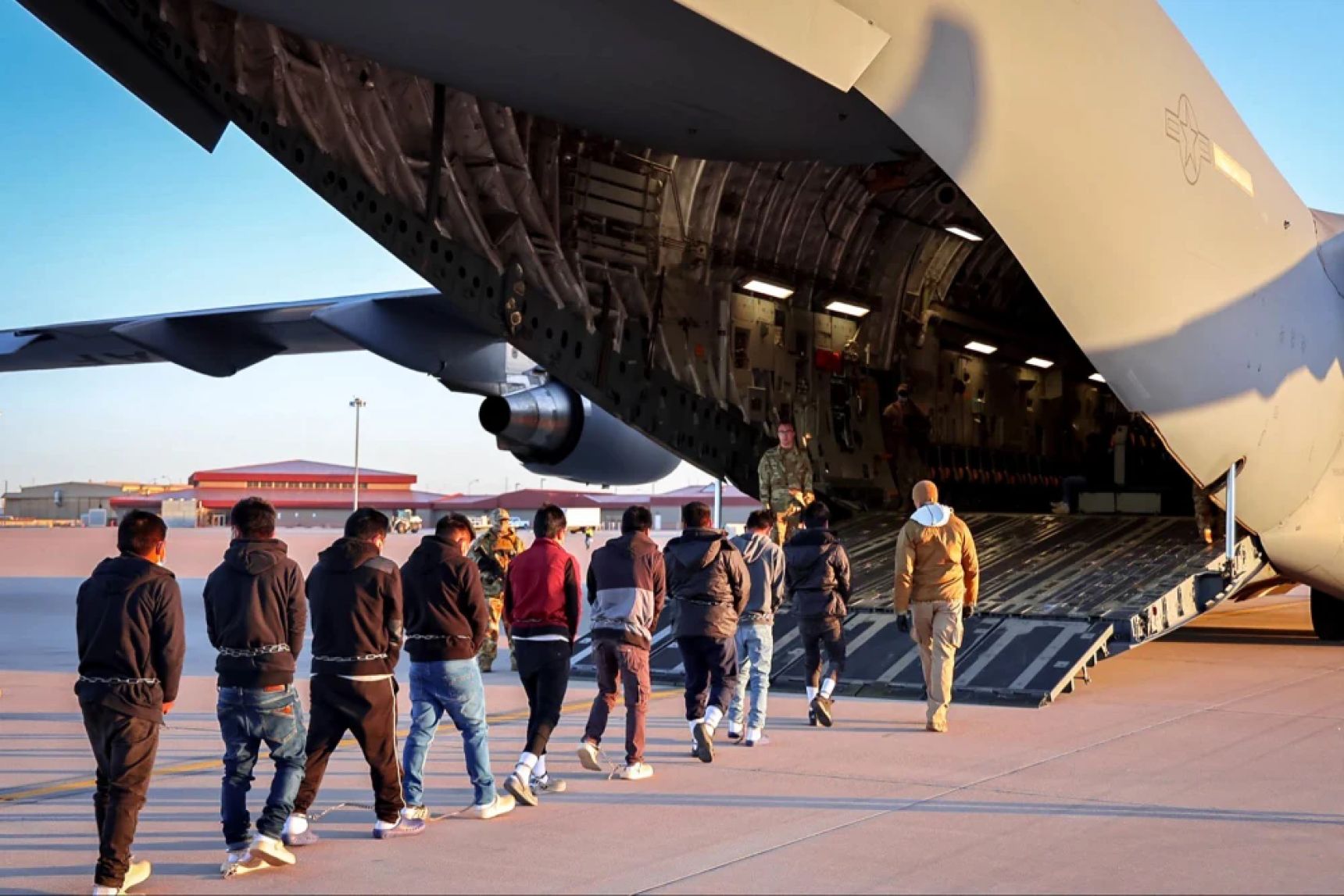
DHS and ICE are on an absolute rampage.
Widespread operations targeting “undocumented immigrants,” particularly those with any criminal record, even minor infractions.
Voluntary self-deportation incentivized with a cash payment and government-arranged flight via the CBP Home app.
Mandatory detention has become the rule rather than the exception.
2. Humanitarian Parole Programs? Kicked to the Curb
Countries affected include Colombia, Cuba, Ecuador, El Salvador, Guatemala, Haiti, Honduras, and many others.
Hundreds of thousands previously protected under Biden-era parole programs are now left without options.
3. Temporary Protected Status (TPS)? A Door Slams Shut
Ethiopia removed from TPS.
Many other countries remain under active threat of termination.
No guarantees; stability no longer exists.
4. Enhanced Vetting & Biometrics? Welcome to Big Brother
Expanded biometrics including fingerprints, eye scans, and voice samples.
Mandatory social media screening covering five years of online activity.
Applies even to visitors from all 42 Visa Waiver Program countries.
Creation of a new Center for Immigration Screening to identify “high-risk” applicants
5. H-1B & Employment-Based Visas? ‘America First’ Means Your Job Second

Tighter definitions of “specialty occupation.”
Increased wage requirements.
Introduction of the “Trump Gold Card,” a premium investor/employment pathway for the exceptionally wealthy.
6. Alien Registration Requirement? Back to the Dark Ages
Certain non-citizens must now formally register with authorities.
Proof of legal presence must be carried and produced when demanded.
7. Asylum Restrictions? Good Luck With That
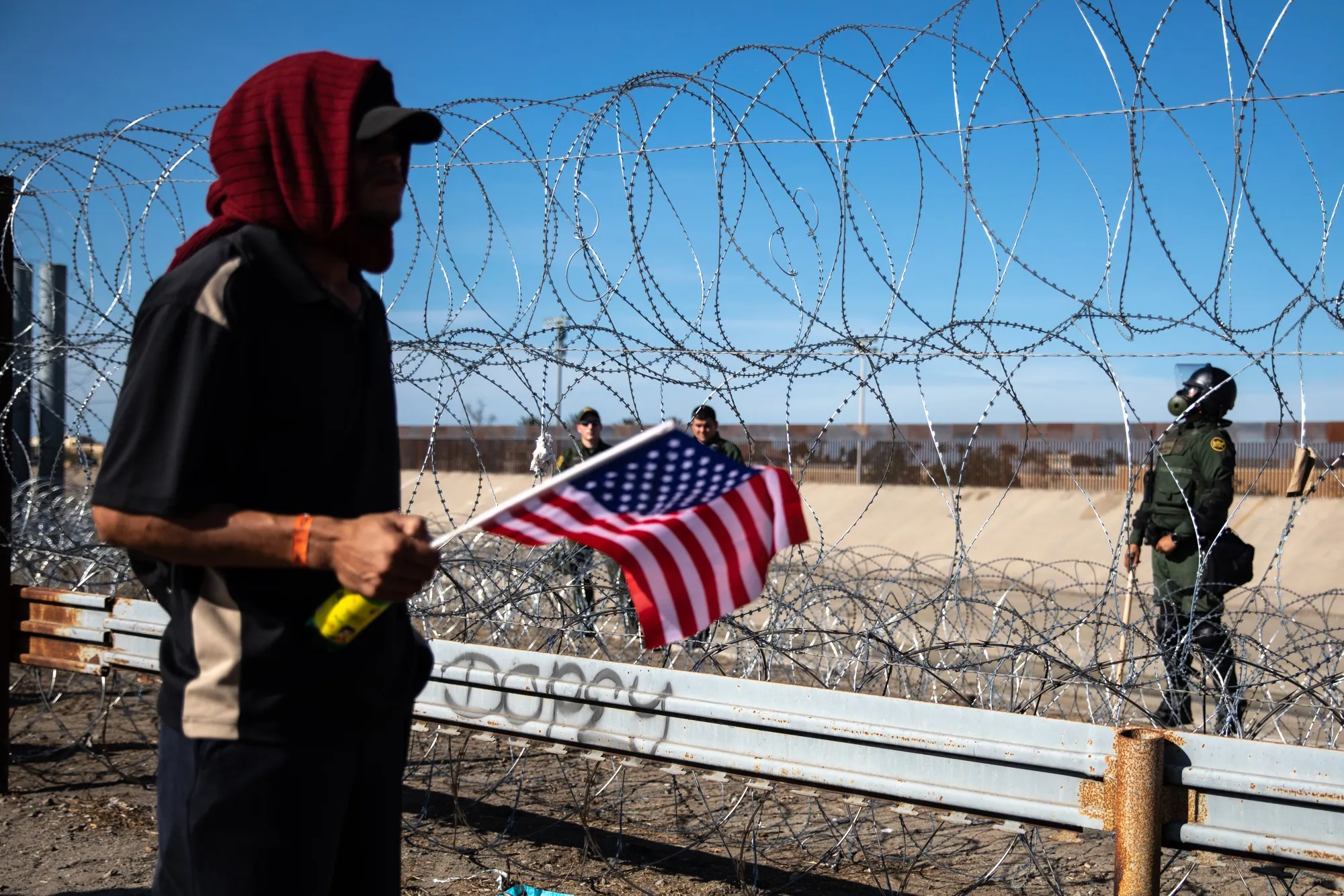
Southern border effectively sealed.
Expanded expedited removal authority.
“Remain in Mexico” policies reinstated.
8. Fee & Processing Changes? Pay Up, Buttercup, and Wait
USCIS now accepts electronic payments only.
Processing times significantly lengthened.
Increased scrutiny justified as “national security” protection.
The Expanded Travel Ban: Blacklisted and Restricted Countries in 2026
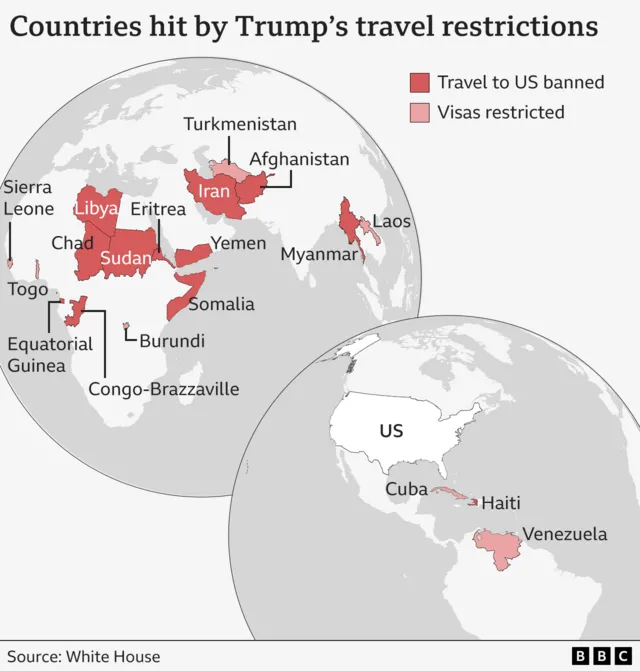
Mark the date: December 16, 2025. A presidential proclamation expanded travel and immigration restrictions, fully effective January 1, 2026. Nearly 40 countries are now impacted through full bans or partial restrictions.
Countries with Full Bans (Severe Restrictions on Most Visas)
Nationals from these countries are generally prohibited from obtaining immigrant and many non-immigrant visas:
Afghanistan
Myanmar (Burma)
Chad
Republic of the Congo
Equatorial Guinea
Eritrea
Haiti
Iran
Libya
Somalia
Sudan
Yemen
Laos
Sierra Leone
Burkina Faso
Mali
Niger
South Sudan
Syria
Countries with Partial Restrictions (Limited Visas, Heightened Scrutiny)
Angola
Antigua and Barbuda
Benin
Burundi
Côte d’Ivoire (Ivory Coast)
Dominica
Gabon
Gambia
Togo
Venezuela
Cuba
Additional countries across sub-Saharan Africa and the Caribbean
Exceptions exist for diplomats, urgent medical cases, and extraordinary circumstances, though approvals are extremely rare.
Your Nationality, Your Destiny: Impact on Applicants
From First-World Countries
Examples include Western Europe, Canada, Australia, Japan, South Korea.

Advantages:
Continued access to Visa Waiver Program (ESTA).
Viable family- and employment-based green card options.
Lower refusal rates and faster processing.
Challenges in 2026:
Mandatory five-year social media disclosure.
Stricter H-1B and L-1 requirements.
Any criminal or security issue results in denial.
From Second-World / Emerging Countries
Examples include India, China, Brazil, Mexico, Turkey.
Advantages:
Continued demand for employment-based immigration.
Family sponsorship pathways still exist.
Challenges in 2026:
Massive visa backlogs, often decades long.
Heightened scrutiny and fraud investigations.
Border enforcement pressure for Mexican nationals.
The Diversity Visa Lottery remains available, though odds are slim. Wealth-based pathways such as the “Trump Gold Card” offer alternative access.
From Third-World / Developing Countries
Includes many nations in Africa, the Middle East, and Latin America.
Advantages:
Extremely limited, mostly confined to DV Lottery or asylum.
Challenges in 2026:
Highest impact from travel bans and restrictions.
Parole and TPS terminations affecting millions.
Asylum pathways nearly closed.
Visa refusal rates exceeding 50% in many countries.
Public charge rules remain strict, requiring proof of complete financial independence.
Practical Things You Should Know for 2026 Applications

Documentation Demands
Extensive proof of home-country ties required.
Employment, property, family, and financial evidence must be airtight.
The Shocking Costs
Application fees range from $200 to over $2,000.
Legal fees commonly start at $5,000 and can exceed $15,000.
Electronic payments only; no cash accepted.
Endless Wait Times
Non-immigrant visas: 3–12 months.
Immigrant visas: years or decades.
The Interrogation (Interviews)
Mandatory in-person embassy interviews.
Intensive questioning on social media, politics, and intent.
Serious Risks
Any misrepresentation results in a lifetime ban.
Undocumented entry triggers expedited removal.
Asylum, Refugees, and Border Realities: A Cruel Joke
Borders effectively sealed.
Credible fear interviews heavily restricted.
Most asylum claims denied rapidly.
Refugee resettlement slowed to a crawl.
The administration frames this as “order.” The humanitarian consequences are profound.
Conclusion: Proceed with Extreme Caution and Meticulous Preparation
Immigrating to the U.S. in 2026 is a gauntlet, especially for applicants from restricted or developing countries. Enforcement and security dominate policy, narrowing legal pathways and raising barriers to unprecedented levels.
Key takeaways:
Hire an accredited immigration attorney immediately.
Monitor USCIS and DHS updates daily.
Ensure applications are flawless and complete.
Expect long waits, high costs, and intense scrutiny.
Legal immigration still exists—but it is narrow, unforgiving, and demands patience, realism, and meticulous preparation.
-
Things You Should Know About Skilled Worker Visa Sponsorship in the UK Post-Brexit in 2026.
Things You Should Know About Skilled Worker Visa Sponsorship in the UK Post-Brexit The Wild, Untamed World of UK Skilled Worker Visa Sponsorship. Remember that whole ‘Brexit’ thing? Well, buckle up, because the UK’s immigration landscape just got ripped up and stitched back together, Frankenstein-style. Free movement? Poof! Gone. Vanished. It’s all about a cold,…
-
Things You Should Know About Visa Sponsorship in the United States Under the Trump Administration

Things You Should Know About Visa Sponsorship in the United States Under the Trump Administration. Visa Sponsorship Under Trump: A Gauntlet, Not a Gateway Forget what you thought you knew about visa sponsorship in the United States. Trump’s second act, starting in January 2025, isn’t just about “significant transformations.” It’s a seismic shift, carving a…
-
Things U Should Know About H1-B Visa in 2026

Things U Should Know About H1-B Visa in 2026 A U.S. student, itching to change their visa status? A measly $6,000 to $9,000, that’s all. Honestly, it’s practically pocket change for the legal bills and “premium” processing. But an overseas hire? Brace yourself: you’re looking at $106,000 or more. Yeah, you heard right. That’s a…

Post Comment